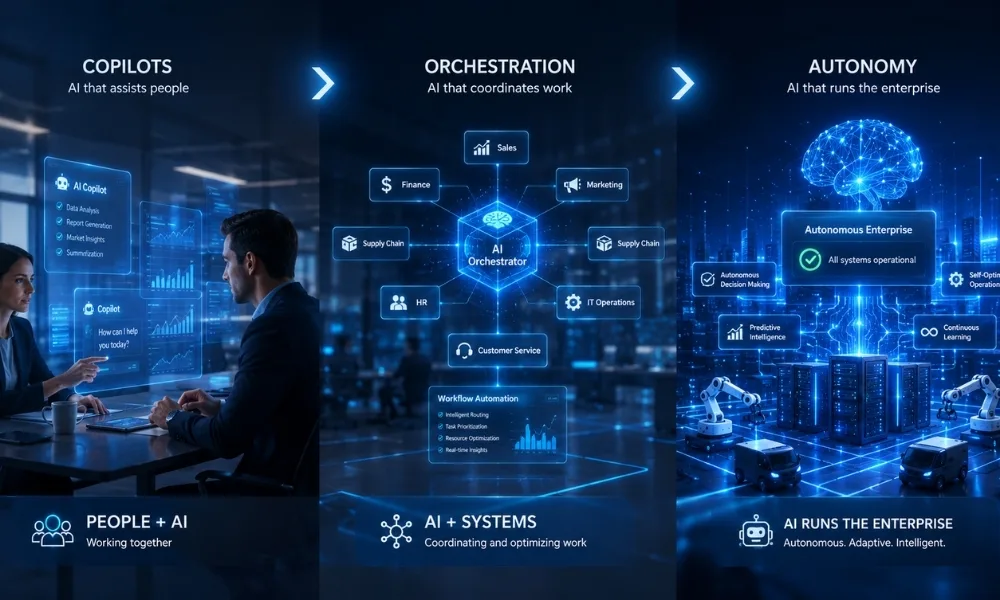

In the rapidly evolving digital landscape of 2026, the traditional “do-it-yourself” approach to IT infrastructure is becoming a relic of the past. As companies face increasing pressure to innovate while maintaining ironclad security, managed cloud services have emerged as the definitive solution for modern enterprises. By offloading the complexities of infrastructure management to third-party experts, businesses can focus their energy on core competencies rather than the technical minutiae of server maintenance.
The shift is not merely about storage; it is a strategic move toward operational excellence. From startups to global conglomerates, the adoption of managed cloud services is driven by the need for agility, cost-predictability and the integration of cutting-edge technology like AI-driven automation.
The Strategic Shift to Managed Cloud Services
The primary catalyst for the widespread adoption of managed cloud services is the sheer complexity of the modern tech stack. Managing a hybrid or multi-cloud environment requires a level of specialization that many internal IT teams struggle to maintain. By utilizing IT Work Solutions provided by a managed service provider (MSP), businesses gain access to a pool of talent and technology that would be prohibitively expensive to build in-house.
Moving from Capex to Opex
Historically, scaling a business required massive capital expenditure (Capex) on hardware. Today, managed cloud services allow companies to operate on an operational expenditure (Opex) model. This “pay-as-you-go” approach ensures that capital is not tied up in depreciating assets but is instead used for growth-driving initiatives like digital marketing services or product research.
For example, look at the market capitalization of Autodesk, which stands at approximately $51 billion in early 2026. Their transition from a desktop-heavy software model to a cloud-first subscription service has not only stabilized their revenue but significantly boosted their valuation by demonstrating the efficiency of cloud-based delivery.
Enhancing Innovation with Software Development Services
Speed is the currency of 2026. To remain competitive, businesses must deploy updates and new features faster than ever. Managed cloud services provide the ideal environment for high-speed software development services. With managed environments, developers don’t have to wait for server provisioning; they can spin up “sandboxes” in seconds to test code in real-world scenarios.
Continuous Integration and Delivery (CI/CD):
When a business utilizes managed cloud services, it inherits automated pipelines that streamline the development lifecycle.
- Automated Testing: Reducing bugs before they reach the user.
- Zero-Downtime Deployments: Updating apps without interrupting the customer experience.
- Global Scalability: Ensuring that code written in New York performs perfectly for users in New Delhi.
By integrating expert IT services into the development process, companies ensure that their software is not only functional but also secure and scalable from the very first line of code.
The Role of Expert IT Services in Security and Compliance
As cyber threats become more sophisticated, the “perimeter” of the business has disappeared. Employees now access data from various locations and devices. Managed cloud services solve this by implementing advanced security protocols that are updated in real-time.
Proactive Threat Mitigation:
Unlike traditional IT, where updates might be applied monthly, managed cloud services offer 24/7 monitoring. This includes:
- AI-Driven Threat Detection: Identifying anomalies before they become breaches.
- Encryption at Rest and in Transit: Ensuring data is unreadable to unauthorized parties.
- Regulatory Compliance: Managed providers stay abreast of shifting laws like GDPR or HIPAA, ensuring your business remains compliant without manual intervention.
Relying on expert IT services means that even if a security flaw is discovered in a common software library, your managed provider can patch it across your entire infrastructure before hackers can exploit it.
Maximizing ROI with Digital Marketing Services
Modern marketing is no longer just about creative slogans; it’s about data. The processing power required to analyze millions of customer touchpoints is immense. Managed cloud services provide the backend muscle needed for sophisticated digital marketing services.
By hosting marketing databases and AI analytics tools on a managed cloud, businesses can:
- Personalize at Scale: Deliver unique content to millions of users simultaneously.
- Real-Time Analytics: Adjust ad spend instantly based on live performance data.
- Seamless Integration: Connect CRM data with advertising platforms to create a unified customer journey.
The synergy between managed cloud services and IT Work Solutions ensures that your marketing team has the technical stability to run global campaigns without worrying about site crashes during high-traffic events.
Operational Excellence through Automatic Data Processing
As businesses grow, the volume of data they generate can become overwhelming. Managing this data manually is no longer feasible. Automatic Data Processing (ADP) is a cornerstone of the managed cloud experience. By automating the flow of information between departments – from payroll to inventory – businesses eliminate human error and speed up decision-making.
Using managed cloud services to power your Automatic Data Processing ensures that your data pipelines are elastic. Whether you are processing 1,000 invoices or 1,000,000, the cloud scales to meet the demand, ensuring that operations never skip a beat.
Comparing Infrastructure Models: Why Managed Cloud Wins
For many leaders, the choice comes down to a direct comparison between keeping servers in the basement or moving to managed cloud services.
| Feature | On-Premise IT | Managed Cloud Services |
| Cost Predictability | Variable (Hardware failures/repairs) | High (Fixed monthly subscriptions) |
| Security Responsibility | Internal Team (High risk of delay) | Managed Provider (24/7 expert care) |
| Scalability | Slow (Weeks for new hardware) | Instant (Auto-scaling technology) |
| Disaster Recovery | Complex/Costly | Built-in redundancy and failovers |
| Talent Access | Limited by local hiring | Access to global expert IT services |
FAQs: Understanding the Switch to Managed Cloud Services
Q1: Are managed cloud services more expensive than managing IT in-house?
While the monthly fee may seem higher, when you factor in the cost of hardware, electricity, physical space and the salaries of specialized IT staff, managed cloud services almost always provide a lower Total Cost of Ownership (TCO).
Q2: How do managed cloud services assist in software development services?
They provide standardized environments that ensure code behaves the same way in development as it does in production. This reduces “it works on my machine” errors and speeds up the release of new features.
Q3: Can managed cloud services handle sensitive financial data?
Yes! In fact, many highly regulated industries use the cloud because the security protocols offered by top-tier providers are often more advanced than what a single company can build.
Q4: What is the benefit of integrating digital marketing services with the cloud?
It allows marketing teams to use Big Data and AI to target customers more accurately, ensuring higher conversion rates and better use of the marketing budget.
Q5: Does my business lose control if I switch to managed cloud services?
No! You maintain full ownership and control over your data. The managed provider simply handles the “heavy lifting” of the infrastructure, allowing your team to focus on how that data is used to grow the business.
Conclusion: Embracing the Future of IT
The transition to managed cloud services is no longer a luxury for forward-thinking companies; it is a necessity for survival in the 2026 economy. By leveraging IT Work Solutions that prioritize security, scalability and cost-efficiency, businesses can finally break free from the constraints of physical hardware.
Whether you are looking to enhance your software development services, protect your data through expert IT services or fuel your growth with digital marketing services, the managed cloud provides the foundation you need. As evidenced by the massive market capitalization of Autodesk and other cloud leaders, the market rewards those who embrace digital agility.