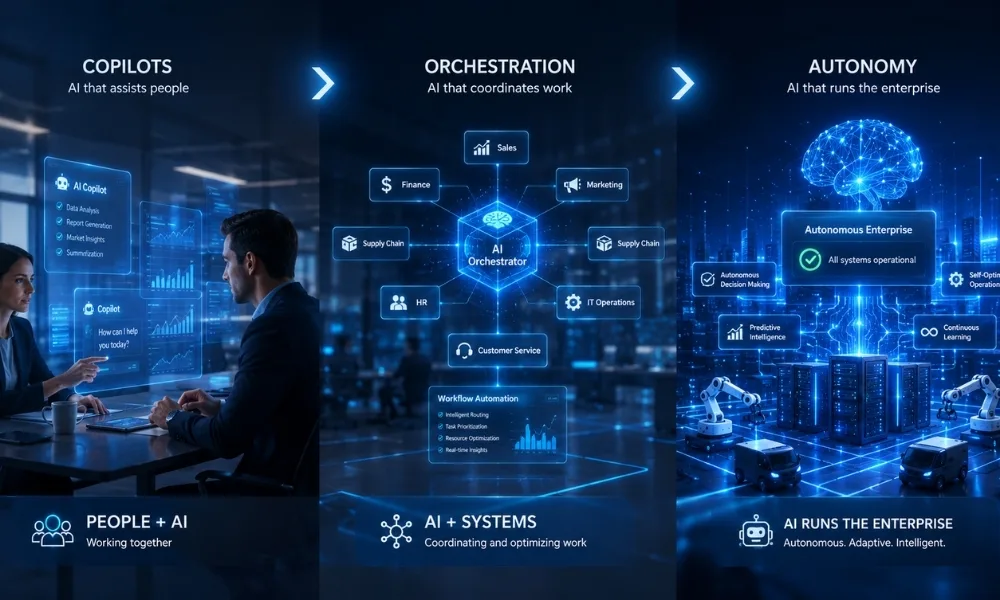

In the hyper-competitive business landscape of 2026, the delta between a struggling startup and a market leader is often defined by technological agility. The days of purchasing physical server racks and hiring massive localized maintenance teams are over. Today, cloud-based IT services serve as the digital backbone for innovation, allowing entrepreneurs to transform a garage-born idea into a global enterprise in record time.
For a startup, the primary goal is growth, but growth without a scalable foundation leads to “technical debt” – a scenario where your systems break just as your customer base begins to explode. By integrating cloud-based IT services from day one, startups gain access to high-tier infrastructure that was once reserved for Fortune 500 companies.
The Paradigm Shift: From Capital Expense to Operational Agility
Traditionally, launching a tech-heavy business required significant “Capex” (Capital Expenditure). You had to guess how much computing power you would need three years down the line and buy it upfront. If you guessed wrong, you either wasted money or crashed during a peak.
Cloud-based IT services have flipped this script. By utilizing IT Work Solutions that operate on an “Opex” (Operating Expense) model, startups only pay for what they use. This shift allows for a lean burn rate, preserving precious venture capital for talent acquisition and product-market fit.
Lessons from Industry Giants
Look no further than the market capitalization of Autodesk, which has seen sustained growth by pivoting its entire ecosystem toward cloud-native environments. This transition allowed them to offer seamless collaborative tools for architects and engineers worldwide. Startups can replicate this success by using cloud-based IT services to ensure their own products are accessible, collaborative and perpetually updated.
Strategic Growth Through Expert IT Services
As a founder, your time is best spent on vision and strategy, not troubleshooting server latencies. This is where expert IT services come into play. Partnering with specialists allows a startup to outsource the complexities of network architecture and data management.
Security and Compliance
One of the biggest misconceptions is that the cloud is less secure than local storage. In reality, cloud-based IT services provide layers of encryption, multi-factor authentication and redundancy that most startups could never build in-house. Expert IT services ensure that your cloud environment is configured correctly to prevent data leaks, which is critical when handling sensitive user information.
24/7 Monitoring and Support
The global economy never sleeps. If your app goes down in London while your team is asleep in San Francisco, you lose revenue and reputation. IT Work Solutions provided by managed service providers offer round-the-clock monitoring, ensuring that cloud-based IT services remain active and performant regardless of the time zone.
Driving Innovation with Software Development Services
The heart of any modern startup is its code. To scale faster, your development cycle must be rapid, iterative and error-free. Software development services that utilize cloud-native tools allow for a process known as Continuous Integration and Continuous Deployment (CI/CD).
The Power of Microservices
By using cloud-based IT services, developers can build applications as a collection of small, independent services rather than a single, monolithic block. If you want to update the “Checkout” feature of your app, you can do so without touching the “User Profile” section. This modularity, supported by professional software development services, means you can pivot your product features in days rather than months.
Global Collaboration
Cloud-hosted repositories (like GitHub or GitLab) and virtual development environments mean your team can be truly global. Whether your lead developer is in Bangalore and your UI designer is in Berlin, cloud-based IT services provide a unified workspace. This access to global talent is a key driver in how startups scale their intellectual property faster than local competitors.
Marketing at Scale: Digital Marketing Services
Building a great product is only half the battle; the world needs to know it exists. Modern digital marketing services are now inextricably linked to the cloud. The sheer volume of data generated by social media, search engines and user behavior requires the massive processing power found in cloud-based IT services.
Data-Driven Decision Making
Startups can no longer afford “spray and pray” marketing. By leveraging IT Work Solutions that include big data analytics, marketing teams can identify exactly which customer segment is most likely to convert.
- A/B Testing: Running thousands of variants of an ad simultaneously.
- Predictive Analytics: Using AI to forecast customer churn before it happens.
- Automation: Utilizing tools like Automatic Data Processing (ADP) to manage the backend of affiliate marketing payouts and influencer contracts.
When digital marketing services are integrated with your cloud database, every dollar spent is tracked, analyzed and optimized for maximum ROI.
Operational Efficiency and Automated Data Processing
As a startup scales from 5 employees to 500, administrative tasks can become a bottleneck. This is where the intersection of human resources and cloud-based IT services becomes vital.
Automatic Data Processing is no longer just about printing paychecks. In 2026, it represents a suite of cloud-integrated tools that handle taxes, compliance and employee benefits across multiple borders. By automating these “boring” but essential tasks through IT Work Solutions, startup leaders can stay focused on the “big picture” items that drive valuation and market share.
Traditional IT vs. Cloud-Based IT Services
| Feature | Traditional On-Premise | Cloud-Based IT Services |
| Initial Cost | High (Hardware/Setup) | Low (Subscription-based) |
| Scalability | Slow (Manual Upgrades) | Instant (Auto-scaling) |
| Maintenance | In-house Team Required | Managed by Provider |
| Disaster Recovery | Complex/Expensive | Built-in Redundancy |
| Collaboration | Localized | Global/Remote-friendly |
Building a Resilient Future
The ultimate benefit of cloud-based IT services is resilience. If a physical office is compromised or a local hardware failure occurs, a cloud-first startup remains operational. This “business continuity” is a major green flag for investors during Series A and B funding rounds. They want to see that your IT Work Solutions are robust enough to handle the pressures of a rapid global rollout.
Furthermore, the synergy between software development services and expert IT services creates a culture of “DevSecOps” – where security, development and operations work in a continuous loop. This holistic approach is the gold standard for scaling in the current era.
FAQs: Mastering Cloud-Based IT Services
Q1: How do cloud-based IT services reduce the cost of failure for startups?
Because you pay only for what you use, you can test a new product feature or marketing campaign on a small scale. If it fails, you can shut down those cloud resources instantly without being left with expensive, unused hardware.
Q2: Why should a startup invest in expert IT services early on?
Early investment prevents “architectural debt.” An expert ensures your systems are built to scale from day one, saving you the massive cost of rebuilding your entire infrastructure two years down the line.
Q3: Can digital marketing services help in B2B scaling?
Yes! Cloud-based CRM and marketing automation tools allow for precise lead scoring and automated follow-ups, which are essential for managing long B2B sales cycles.
Q4: Is Automatic Data Processing (ADP) compatible with cloud-based startups?
Absolutely! Modern payroll and HR solutions are cloud-native, allowing them to sync perfectly with your existing IT Work Solutions to manage a remote, global workforce.
Q5: What role does the market capitalization of Autodesk play in understanding cloud trends?
It demonstrates that even established giants must embrace cloud-based IT services to remain relevant and valuable. For startups, it serves as a roadmap for building a service-oriented, scalable business model.
Conclusion: The Sky is Not the Limit
In 2026, the cloud is no longer a “luxury” or a “trend” – it is the fundamental environment where business happens. For startups, cloud-based IT services offer a path to scale that is faster, safer and more cost-effective than ever before.
By combining expert IT services with high-end software development services and fueling growth through data-backed digital marketing services, your startup can bypass the traditional hurdles of physical infrastructure. The integration of comprehensive IT Work Solutions ensures that as your dreams grow, your technology will be right there to support them.
The question is no longer if you should move to the cloud, but how quickly you can leverage cloud-based IT services to disrupt your industry.